Strategic Onion Crop Planning: How to Maximize Field Profitability
Learn how to structure your onion crop planning, lower operational costs, and boost farm profitability through smart strategies and modern harvest management.
Strategic Onion Crop Planning: How to Maximize Field Profitability
Vegetable farming is one of the most dynamic and demanding sectors in agriculture. In onion cultivation, the margin for error is narrow: market fluctuations, unpredictable weather conditions, and high reliance on labor make detailed planning an essential requirement for financial sustainability.
Strategic crop planning goes far beyond purchasing seeds and preparing the soil. It involves a systemic view that spans from cultivar selection to operational cost optimization at the decisive harvest time.
In this article, we present the fundamental steps to structure efficient planning for your onion crop, reduce losses, and secure higher profitability season after season.
1. Cost Mapping and Financial Management
Farm profitability is not determined solely by the final selling price per bag, but primarily by strict control over production costs. To maximize margins, mapping every stage of the production cycle is essential.
- Inputs and fertilizers: Conduct soil analysis in advance to apply precise soil corrections, avoiding waste of fertilizers and soil conditioners.
- Labor: Calculate the impact of manual work in planting, crop care, and harvesting phases. This is usually one of the most expensive line items in the budget.
- Financial timeline: Project cash flow while factoring in weather contingencies and input price variations.
By maintaining clear metrics on cost per hectare, growers gain bargaining power when purchasing inputs and achieve greater predictability throughout the season.
2. Cultivar Selection and Soil Preparation
Selecting the right cultivar must consider regional microclimates, planting windows, and consumer market demands. Cultivars featuring strong skin, good scale retention, and resistance to foliar diseases drastically reduce post-harvest and storage losses.
Furthermore, soil health serves as the foundation for high yields:
- Decompaction and drainage: The onion root system is shallow and extremely sensitive to waterlogging. Well-structured soils promote uniform bulb development.
- Crop rotation: An indispensable practice to break pathogen cycles (such as botrytis and pink root) and enhance soil organic matter.
3. Rational Phytosanitary Management and Irrigation
Onion crops require constant attention to moisture levels and pest management against threats like thrips and downy mildew. Unregulated irrigation can compromise bulb health and accelerate rot processes.
- Efficient irrigation systems: Adopting drip systems or precisely calibrating guns and pivots reduces water consumption and foliar fungal outbreaks.
- Integrated Pest Management (IPM): Weekly field monitoring enables targeted crop protection applications, preventing unnecessary treatments that raise production costs.
4. Harvest Operational Efficiency and Loss Reduction
Harvesting is the crowning phase of the crop cycle, demanding maximum speed and precision. Delays during this window expose bulbs to excessive moisture or scorching sun, resulting in sunburn, rot, and severe loss of commercial value.
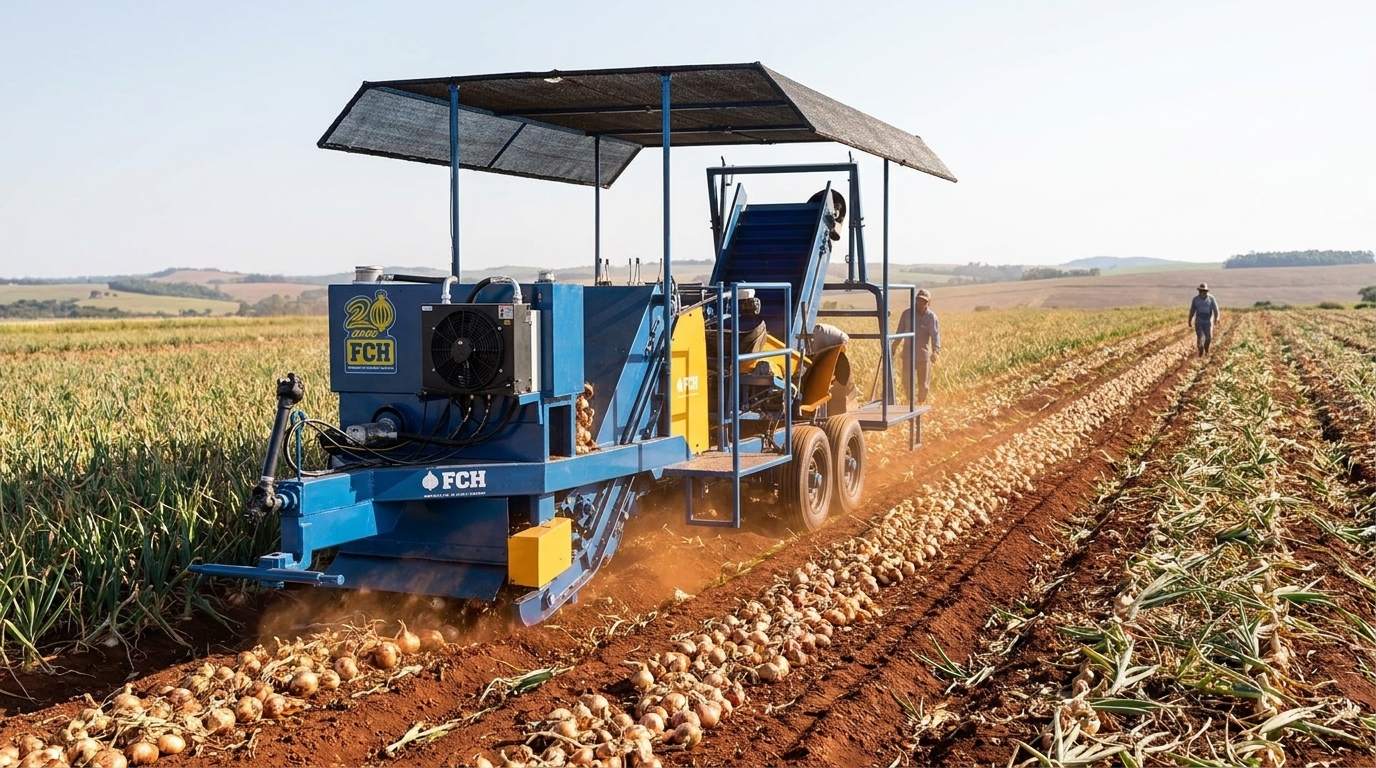
Historically, manual harvesting represents one of the largest bottlenecks for onion growers due to labor shortages and rising seasonal wage costs.
Transitioning toward modernized operations offers decisive competitive advantages:
- Substantial reduction in labor expenses: Replacing manual tasks with optimized operational processes lowers cost per hectare.
- Faster gathering speed: Capitalizes on favorable weather windows, gathering large acreage at the exact point of maturity.
- Standardization and sorting: Quality equipment ensures efficient bulb separation, preserving physical integrity and increasing market presentation value.
- Safety and compliance: Operations aligned with safety standards (such as NR 12) provide a secure working environment while protecting the farm from liabilities.
5. Preventive Maintenance and Operational Readiness
No planning is effective if harvest operations fail at the critical moment when bulbs are ready in the field. Preventive maintenance of all field machinery, handling equipment, and support tools should take place months before harvest begins.
- Comprehensive inspection: Evaluate wear on drive belts, rollers, chains, and structural components of handling tools.
- Use of genuine parts: Original replacement parts ensure durability and prevent unscheduled downtime during peak harvest season.
- Refurbishment: Investing in preventive refurbishing for older machinery restores productive capacity at an excellent cost-benefit ratio.
Strategic Partnership for Success in the Field
Successful planning combines business strategy, agronomic excellence, and robust operational solutions. When growers reduce labor costs and increase sorting efficiency, final profitability multiplies.
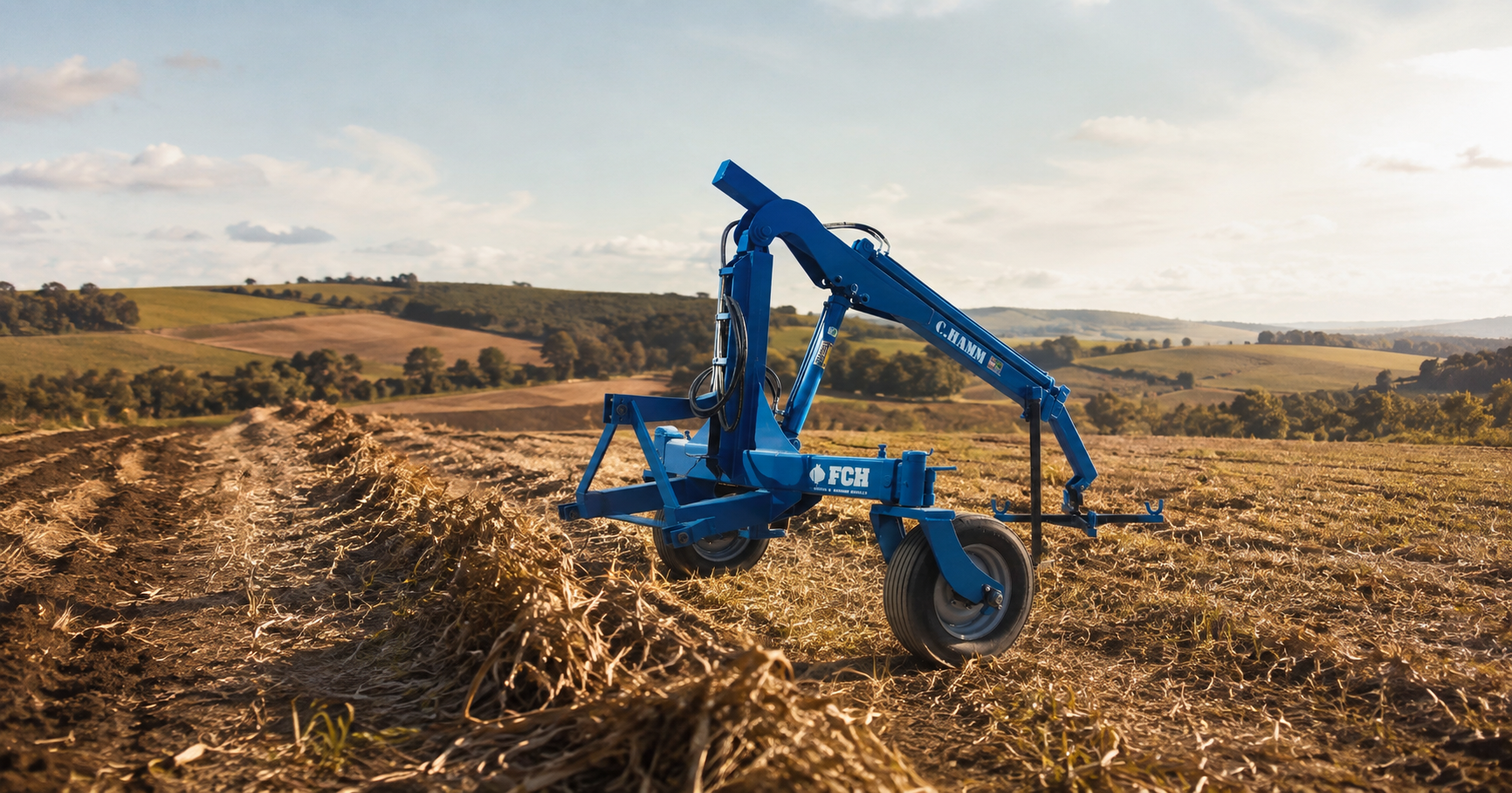
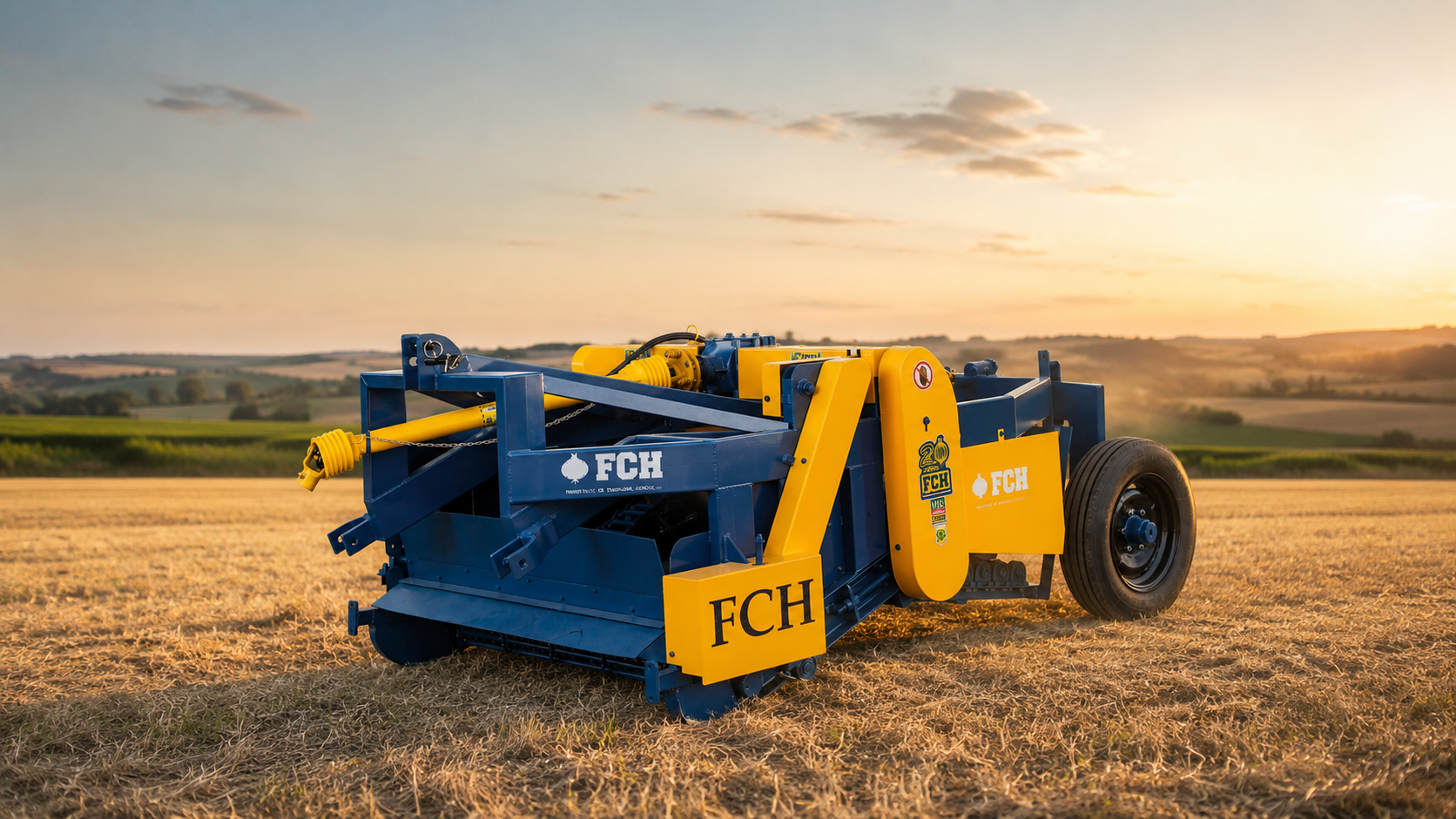
FCH Indústria de Máquinas Agrícolas is rooted in Ituporanga, Santa Catarina, the onion capital of Brazil, bringing over two decades of close partnership with farmers in its DNA. Founded on the vision of Mr. Vigand Hamm, FCH develops solutions engineered to withstand demanding field routines, offering reliable machinery, genuine spare parts, expert technical support, and specialized equipment refurbishment.
Ready to elevate the profitability and efficiency of your next onion harvest? Contact the FCH team today and discover how our solutions can transform your daily farming operations.